
Vehicle Fleet Management: Best Practices for Growing Businesses
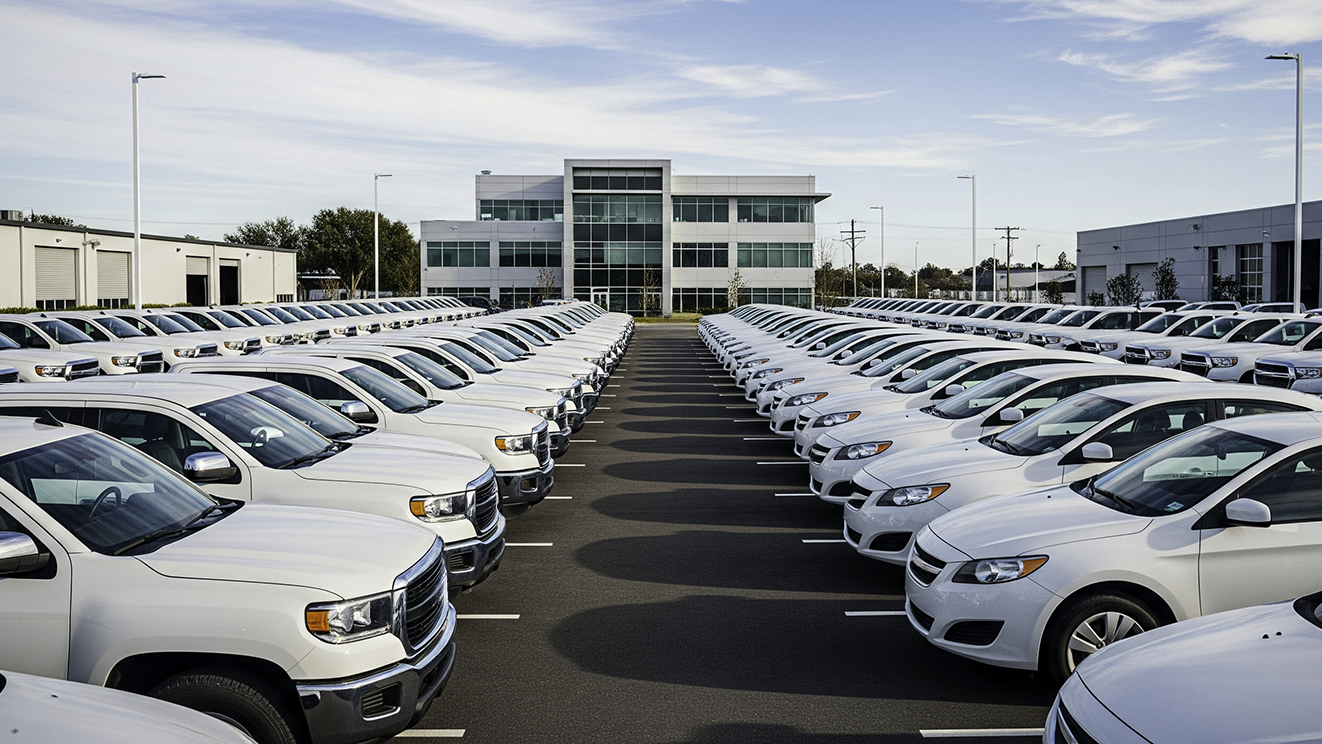
When a business starts out with three to five vehicles, managing them is fairly simple. Vehicle fleet management, which covers assigning vehicles, scheduling maintenance, and route planning, is mostly handled through verbal communication at this stage. Everything's informal and ad hoc, and it works. But as the business grows, so does its fleet, and the business hits an inflection point.
When a fleet crosses into double digits, informal management not only breaks down but also leads to financial drains and increased liability risks. At that point, it’s time for a fleet management system. But while that technology is indeed the solution, it doesn't work on its own. Effective vehicle fleet management, the ongoing process of tracking, maintaining, and coordinating a company's vehicles and drivers, doesn't magically happen after purchasing new software and installing tracking hardware.
True change requires rethinking your operations and making the technology work for your team. That’s what this guide will help with. Below, we break down the best practices for growing fleet operations. You’ll learn how to establish a structured operational framework, track the metrics that actually matter, and fix high-cost inefficiencies the right way.
Recognizing When Vehicle Fleet Management Needs to Evolve
How do you know when it’s time to evolve your fleet management practices? Most growing businesses don't experience a single event that forces the change. Instead, three warning signs tend to appear together, which are tracking that breaks down, maintenance that turns reactive, and key operating data that goes unmeasured. You'll typically notice one or more of these things:
- Ad hoc tracking breaks down: Fleet managers can no longer determine the location of every vehicle and driver without a convoluted series of phone calls or text messages.
- Maintenance is reactive, not preventive: Drivers used to tip you off when the Check Engine light came on, or a vehicle started acting up. Now, the need for service is discovered only after roadside breakdowns or other costly failures.
- Unowned and untracked data: Nobody owns or tracks fuel efficiency, idle time, or cost-per-mile metrics across the organization. With three to five vehicles, you might have been able to calculate some of these metrics in your head. Now you can't, and there's no other tool tracking that data for you.
While every organization scales at its own pace, the informal approach to fleet management for small businesses typically breaks down once you have 8 to 15 vehicles to contend with.
Building a Data-Driven Fleet Operations Framework
As you formalize vehicle fleet management, resist the urge to track every available data point. The goal is a small set of KPIs that directly drive decisions, not a dashboard full of numbers nobody acts on.
Here’s a minimal, yet high-impact set of fleet KPIs that really matter because they drive operational decisions:
Once these KPIs are in place, the right fleet tracking system should surface them automatically rather than requiring manual calculation.
Reviewing Data on a Set Schedule
Data is only valuable if you use it to reshape your fleet management. This three-tiered review cadence often works well for growing businesses:
- Weekly operational check: This is the meeting where operations managers review vehicle utilization, idle time outliers, and active maintenance alerts.
- Monthly cost review: Team leaders should regularly review total fuel spend per mile, repair costs per asset, and other key expense metrics.
- Quarterly structural review: Once every three months, fleet leaders should evaluate overall route efficiency, assess vehicle replacement timelines, and right-size total fleet count.
Standardizing Processes Across a Growing Fleet
Technology alone can't fix broken organizational processes. It can be difficult to break away from verbal routing and depending on tribal knowledge. Clear, standardized policies and processes ensure that everyone on your team is aligned as you scale up your fleet. Three processes matter most as you formalize vehicle fleet management, which are driver onboarding, maintenance triggers, and clear ownership.
Create Driver Onboarding and Vehicle-Handoff Processes
Implement a standardized onboarding process for new drivers. This should cover expected driving standards, what is and isn't allowed for personal use of company vehicles, and accident procedures.
You should also establish a standardized vehicle-handoff checklist for shared trucks. Drivers should complete a two-minute walk-around inspecting tire tread, body condition, fluid levels, and fuel status before accepting responsibility for an asset.
Perform Maintenance Based on Mileage and Diagnostics
As soon as your fleet starts to grow, driver-dependent maintenance reporting starts to fail. Instead of waiting for a driver to notice a dashboard light or recall when the last oil change occurred, service schedules should be triggered by odometer milestones and engine diagnostic codes. This shift from reactive to preventive maintenance reduces roadside breakdowns and lowers overall repair costs.
Establish Operational Ownership
As a fleet grows and you move away from verbal management, it can be difficult to tell who is responsible for which part of your operations. To counter this, establish clear lines of ownership across your organization.
For example, you might make these assignments:
- The driver owns daily pre-trip inspections, cabin cleanliness, and safe operation.
- The operations manager owns daily route assignment, idle reduction, and prompt handling of safety alerts.
- The fleet manager owns vendor contracts, capital allocation, insurance policies, and service schedules.
Controlling Costs as Your Fleet Size Increases
As a fleet scales, what was once minor operational waste can grow into significant annual losses. It’s critical to identify and address these cost leaks before they grow:
- Excessive idling and inefficient routing: An idling engine consumes up to half a gallon of fuel per hour. Across a 20-vehicle fleet idling two hours per truck per day, a business wastes thousands of dollars annually in wasted fuel costs while accelerating engine wear.
- Deferred maintenance: Ignoring minor mechanical warnings or extending the interval between oil changes can lead to severe transmission and engine damage, which turns routine service into thousands of dollars in repair bills.
- Insurance premium spikes: Unmonitored speeding, aggressive acceleration, and harsh braking significantly raise a fleet's risk profile, driving up commercial auto insurance premiums.
Each of these leaks is preventable once you have visibility into idle time, maintenance timing, and driver behavior data.
Right-Sizing: Making Use of What You Have
When business operations experience growth, the knee-jerk reaction is often to purchase additional vans or trucks. However, utilization data often reveals that many of the assets you already have are underutilized. Before committing untold thousands of dollars to capital expenditures, evaluate asset utilization across your current fleet. If utilization is below 80 percent, redistributing existing vehicles is usually cheaper than buying new ones.
Maintaining Compliance and Managing Risk at Scale
Unfortunately, larger fleets face increased legal and liability risks that smaller operations do not. When you have just a few vehicles to manage, regulatory compliance is much easier. Insurance premiums are lower, and the carriers typically need less information from you. But as you scale up, you now have to be concerned with:
- Department of Transportation (DOT) numbers: Operating commercial vehicles over specific weight limits or transporting specific materials requires formal DOT registration, and drivers who qualify may also need electronic logging device (ELD) compliance for hours-of-service tracking.
- Mileage and tax reporting: Crossing state lines frequently requires structured mileage logging to meet fuel tax reporting and state licensing compliance requirements.
- Commercial insurance disclosures: Insurance carriers require lists of authorized drivers and garage locations, as well as documentation of safety policies.
In the event of an accident or traffic dispute, an under-documented fleet leaves a business exposed to heavy legal liability. Having records like trip histories with speeds traveled, engine diagnostic logs, and documented driver behavior go a long way toward protecting your business against false claims.
Building Accountability Without Surveillance
One of the most challenging parts of any technology implementation is change management. Employees get comfortable with “the way we’ve always done it,” even if that’s no longer working. Big changes can also be scary. In particular, drivers can push back against fleet monitoring if they perceive it as surveillance.
To help with the changes, you should frame vehicle fleet management policies around safety, shared accountability, and professional standards. Here’s how:
- Publish transparent policies: Clearly define expectations for speed limits, personal vehicle use, and other driver behaviors in writing.
- Apply standards consistently: Enforce safety policies uniformly, regardless of team members’ seniority or performance levels.
- Focus on driver coaching: Use driver behavior data to coach employees and reward safety, rather than treating these metrics as a punitive tool.
Framed this way, fleet monitoring becomes a shared safety tool rather than a surveillance system, which is what earns driver buy-in.
Putting the Framework to Work: A Step-by-Step Action Plan
When you’re ready to transition your business from informal tracking to a structured and scalable fleet management model, you need a plan. Start with this simple five-step action plan and adapt it to your organization:
- Audit your fleet for a baseline: List every vehicle and driver in your business. Identify where informal habits (spreadsheets, verbal directions) are currently creating blind spots.
- Define your core fleet KPIs: Select four to six metrics that align with your business goals, for example, utilization rates, idle time, fuel cost per mile, maintenance cost per asset, and safety event frequency.
- Choose scalable systems: Look for vehicle fleet management platforms that offer real-time GPS tracking, driver behavior alerts, and maintenance diagnostics, and that can scale with your fleet rather than requiring a switch as you grow.
- Set review schedules and assign ownership: Establish weekly, monthly, and quarterly reviews, and assign responsibility for key areas of your operations (e.g., maintenance, route efficiency, and driver coaching).
- Revisit the framework quarterly: As your vehicle count grows, use this review to refine policies, adjust routes, and continuously optimize operations.
Avoid These Common Mistakes
As long as your implementation plan includes the five steps above, you should be well on your way to scaling your fleet effectively. Just make sure to avoid these common missteps:
- Purchasing additional vehicles to address perceived capacity shortages before analyzing and optimizing current vehicle utilization.
- Installing tracking hardware without establishing operational processes to act on the incoming data, leaving the system unused.
- Using driver behavior data exclusively as a punitive tool, which erodes trust and undermines adoption across your team.
How Bouncie Simplifies Vehicle Fleet Management for Growing Businesses
Updating your fleet operations framework for a growing business requires accurate, real-time data, since that data is the source of the KPIs you use to monitor growth and measure success. Attempting to gather location updates, track mileage logs, and monitor maintenance needs manually is a heavy administrative burden that ultimately limits scalability.
You need a technology platform that lets you put the manual tracking in the past and scale appropriately, and that's Bouncie. The Bouncie GPS tracker and its included mobile app trade manual tracking for automated infrastructure that simplifies vehicle fleet management for growing businesses.
Bouncie offers:
- Automated data collection: Bouncie's plug-and-play OBD hardware automatically captures real-time location data, idle duration, and driver safety metrics (speeding, hard braking, rapid acceleration), populating your dashboard without manual driver logs.
- Proactive engine diagnostics: Instead of waiting for a driver to report an issue, Bouncie detects engine diagnostic trouble codes and notifies you instantly.
- Trip histories and geofencing: In addition to letting you know where your vehicles are right now, Bouncie’s detailed trip histories and customizable geofencing alerts show where they’ve been and notify you when they arrive at or leave specific locations.
Bouncie is a simple yet powerful solution that automates the work you used to handle on an ad hoc basis. With Bouncie tracking your fleet and monitoring driver behavior, fleet managers and business owners can focus on strategic scaling rather than being bogged down by manual processes.
Growing Your Business Without the Growing Pains
Successfully scaling vehicle fleet management is an operational challenge, regardless of the technology you have. The informal habits that sustain a three-vehicle startup start to fail as your fleet grows into double digits. Buying and installing a technology solution is only half the battle. The more challenging part is making the organizational changes that allow you to scale.
Bouncie is the vehicle tracking platform designed for small business scaling. While you focus on your metrics and meeting your KPIs, Bouncie collects the important data, monitors and tracks your drivers, and provides the foundation for sustainable growth. To see how it can help your business grow, learn more about Bouncie for Fleets.

